By: Alani E. Gebon | Staff Writer
It is no secret that our world is incredibly divided. In a time of high technological advancements, a stronger focus on the individual, and an ever-changing global society, it is also not surprising that stark divisions have arisen. However, it seems nowadays, it is politics that divides us more than ever.
According to an article from Syracuse University “In 2022, 72% of Republicans and 63% of Democrats viewed the opposing party as more immoral than other Americans, up dramatically from 47% and 35% in 2016” (Stirling, 2025). The article cites misconceptions about those from opposing parties, frustrations with the government, and the media landscape.
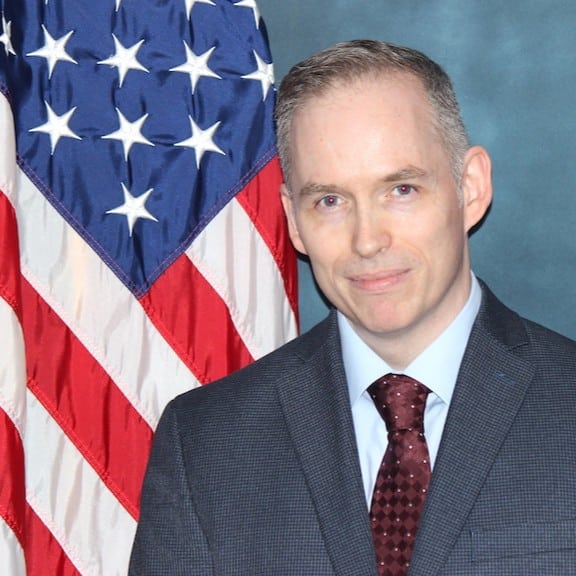
Regarding college partisan polarization, Salve’s very own Dr. Patrick Campbell explains the trend we have been seeing in the nation and on our own campus. Dr. Campbell stated that while opinions are diversified due to the United States’ differences in geography, wealth, etc., the steep increase in polarization is a cognitive issue. As humans, we suffer from certain cognitive shortcomings, including confirmation bias and motivated reasoning. We tend to search for news and evidence that supports what we believe, oftentimes at the expense of keeping an open mind.
When there is a high-profile political event, we are often fed the news through a polarized lens. Whether from our own biases, news platforms that lean one way or the other, or from those with strong beliefs. Polarization exists, but it tends to be perpetuated by politicians, activists, and the media. A politician needs division to win power, activists have an easier time working when conflict is made black and white, and the media strives to create a passionate and reliable viewer base. Polarization is worsened to uphold power, viewership, and oversimplification.
This stems from our desire to make politics a simple issue; to consider it to be black and white while ignoring the gray area where opinions may overlap. Dr. Campbell mentioned the topic of immigration as an example. On Trump’s side, immigration is considered as a danger to the country’s safety and character, and it must be quote-unquote “shut off and rolled back.” From this viewpoint, immigration has been painted as a threat, and many Americans because of this are agreeing with this in masses. But what these supporters are ignoring is how vital immigration is to the American story. Those who are anti-Trump and/or anti-immigration tend to neglect that there was a surge in undocumented immigrants into the country over the past few years. There are millions of people who hold the status of “immigrant,” and deportation or persecution may pose various consequences to the very nature of how communities, businesses, and social services operate.
Dr. Campbell explained that a large issue comes from something known as “affective polarization.” It is when a “tribe” or group views their own as without fault but views the other group with despise. He explained that in 2026, there is a startling number of Americans who may support political violence, a high that hasn’t been seen in several decades.
On campuses across America, Dr. Campbell has seen an interesting trend. He explains that many students do not wish to speak out or give their own opinion, in fear of judgement from peers and negative reactions from professors. Due to this, students struggle to speak freely or candidly on what they believe. However not all hope is lost. On Salve’s campus, however, he states that he has seen far more open mindedness amongst the young generation of students, and people willing to hear the other side.
However, we still must do what we can to fight against polarization and bridge the gap in our society. Dr. Campbell advises to primarily begin with being humble; we need to read news sources that we normally wouldn’t, listen with an open mind to people you might disagree with, and this will open us up to new perspectives. We must begin with realizing that none of us reason perfectly clearly, and our opinions are bound up in political identities and attachments, tribal identities. “To keep political polarization at bay, you need to strengthen your mind,” Dr. Campbell suggests. “Vaccinate your mind against the political polarization bias.”
It is clear to see that although Salve is a kind and welcoming community, political polarization may exist even within our own campus.
Of the general responses I gathered in observations and discussions with the Salve student body, Dr. Campbell’s explanation seems to be aligned with the views of the community. While many Salve students hold firmly to their political beliefs, many would consider themselves as open minded and willing to hear other’s beliefs and rationale. While Salve Regina has had its own moments of political polarization, students appear to be able to retain their humanity and mercy while holding their beliefs firm.
Now, while polarization may be present in the nation, it is important to remember that peaceful relationships can exist between opposing party members. Take these two Salve students, whose strong friendship despite political disagreement is an inspirational story for all.
Jennie and Leah, presidents of Salve’s Republicans and Democrats, respectively, and founders of Salve Votes, are well known in campus politics. I spoke with both recently and learned that not only do they run these political groups together, but they also are very good friends and roommates. Leah and Jennie are both political science majors. Leah joined Salve democrats in her first year and later maintained several E-Board roles. Jennie joined Salve Republicans and served as president in her junior and senior year. Both began to visit the other’s meetings to try to see the other’s perspective and later formed Salve Votes for civic engagement together.
When asked if a strain was put on their friendship due to differing political views, both emphasized that this did not hinder their relationship. Leah explained that she knew Jennie as a person before she knew her partisanship, and hence already knew they could be friends. Jennie added onto this in stating that it is good to talk to people with diverse views, as it helps you develop a deeper understanding. Both reinforced the ideas that politics is not everything in their friendship, and they are able to get along well with some common goals, such as the goal for national improvement.
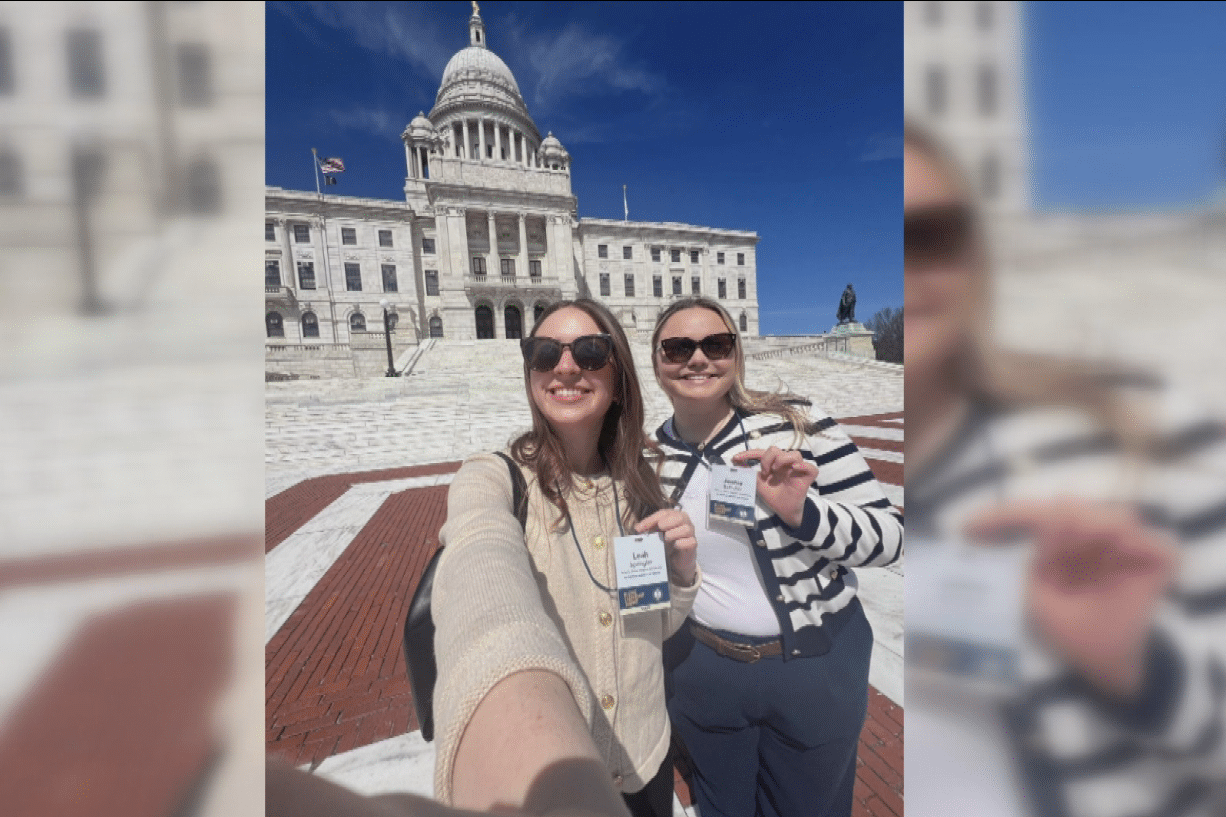
In discussing their political views, they shared that they felt there was more agreement than disagreement. Jennie and Leah agree on concerns with the MAGA movement, unprecedented international events, an overall dislike of political polarization, and moral concerns. Jennie explained that she comes from a more conservative Republican background, and while she may follow some ideals, there is more moderation amongst them in their political partisanship. Leah emphasized that their areas of disagreement come from smaller disagreements, such as economic policies or election procedures.
Across campus, the two noted much of the student body appears to be disengaged from politics. They do not like partisan labels as it emphasizes differences and many have an expectation of conflict when it comes to having different beliefs than another. Students may be civically disengaged and unaware of the potential for bipartisanship.
To help reduce sharp polarization at Salve, they advise students to attend the Democrat and Republican student roundtables, see other perspectives, engage with politics and conversation as opposed to shying away, and suggest an increase in student-only forums to discuss politics. Most importantly, they distinguish between discussing politics to learn about other ideas rather than fighting to defend your own.
Jennie and Leah see Salve as having a less hostile political environment than other schools, where the close-knit community allows students to engage and retain compassion and limits the extremity seen in other locations. Overall, while polarization seems to be sweeping the nation into chaos, change starts small. As a Salve community we can be open minded, learn from others, and foster a positive and open political climate so that we can be the change the nation needs.
*All parties mentioned gave verbal consent to be named in this article
Sources: https://news.syr.edu/2025/10/23/the-great-divide-understanding-us-political-polarization/
Photos provided by Instagram, WikiCommons, salve.edu, UC Davis Magazine, and 10 WJAR.